A more discreet DBX
Aston Martin has expanded its SUV range with the new DBX GT, a model positioned as the most refined and understated interpretation of the brand’s high-performance SUV. It sits alongside the performance-focused DBX S and is aimed at buyers who want a stronger emphasis on luxury, comfort and everyday usability without giving up the dynamic ability expected from the DBX name.
The new model keeps the familiar proportions of the SUV but changes the visual language in a way that favours elegance over aggression. The result is a car that still looks substantial and performance-led, yet presents itself with more restraint than the DBX S.
Exterior changes focus on presence
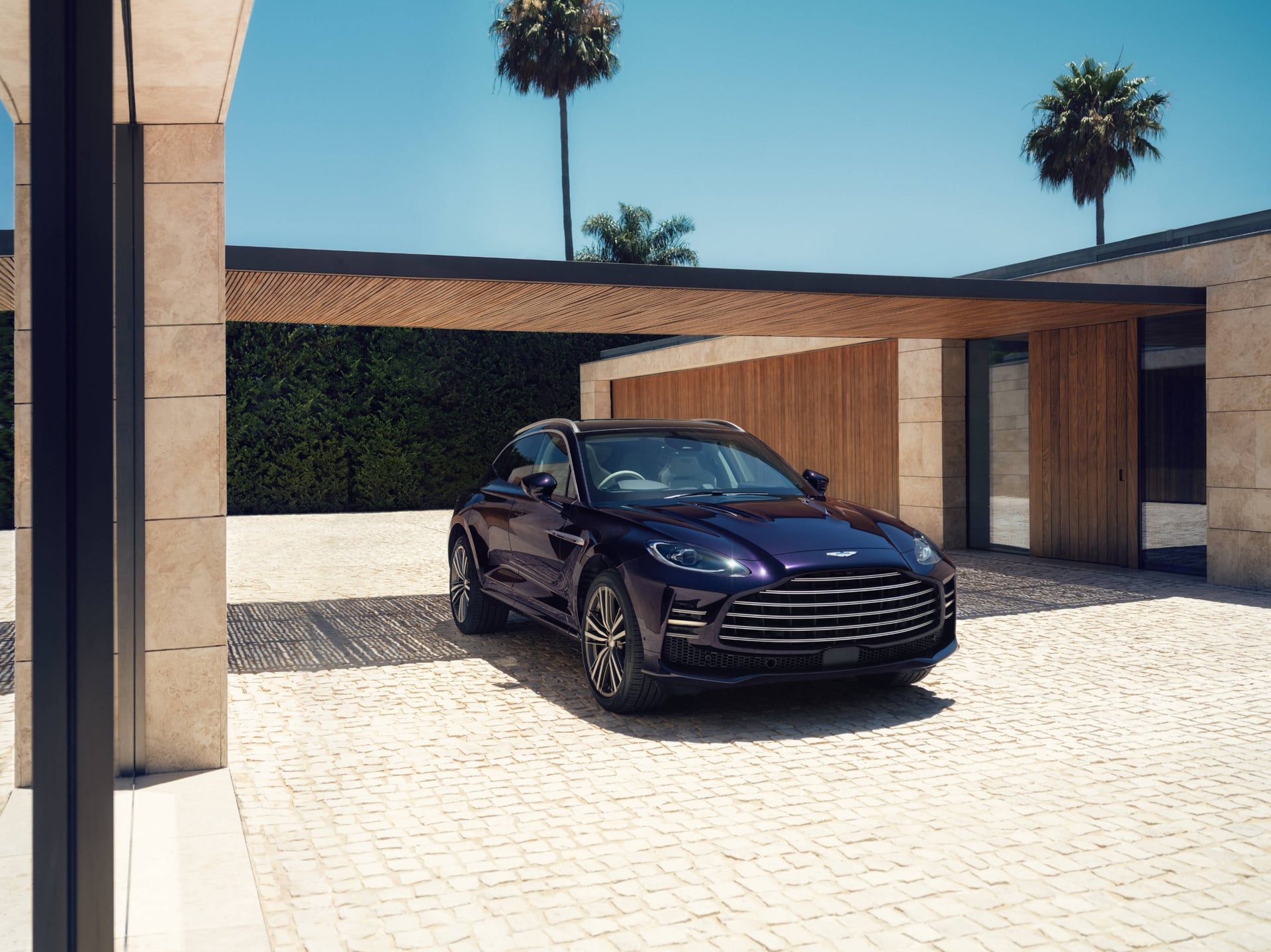
The front end is defined by a new double vaned grille, offered in bright or dark finish. The split metal vanes continue into the outer vents, where the daytime running lights are integrated. The lower front bumper has been reworked to broaden the visual stance of the car and increase the sense of width.
Along the sides, the DBX GT gets a two-piece metal side strake with contrasting polished and satin surfaces. The lower front bumper, sills and rear diffuser are body-coloured as standard, reinforcing the cleaner look. A new 22-inch forged wheel in Satin Titanium diamond-turned finish is fitted as standard, paired with all-season tyres. A 23-inch wheel and tyre package is available for buyers who want a more assertive appearance.
At the rear, new quad exhaust finishers are arranged horizontally in pairs. Their shape and placement underline the width of the rear end, while the bright outer and satin anodised inner surfaces add a more technical finish.
Cabin changes bring more comfort
Inside, the DBX GT receives redesigned front and rear seats with new cushioning, revised bolstering and comfort-focused shaping. A 10mm memory foam layer has been added to the cushion structure, while the side bolsters have been reshaped to improve lateral support. Embroidered details on the new seat forms add a more bespoke feel.
The rear compartment also changes, with a new individual rear seat layout that preserves five-seat flexibility. The two rear seating positions are sculpted to match the front-seat design language, with extended headrests and bolsters intended to improve comfort on longer journeys. A panoramic glass roof comes as standard and increases the amount of natural light in the cabin.
Material quality is a major theme throughout the interior. Anodised metal controls, GT-specific upholstery combinations in monotone, duotone and tritone layouts, quilting, perforation and unique embroidery patterns are all part of the package. Semi-aniline leather and deep pile floor mats are also included. Aston Martin says each front seat uses 691 meters of thread, 3,297 perforation holes and more than four and a half hours of craftsmanship.
Quieter and more refined on the move
Noise suppression has been improved through changes to the body structure, better sealing and additional sound-deadening materials in the doors, wheel arches and rear load area. Acoustic laminated rear side glass is also used, while deep pile carpets add another layer of insulation. The measured result is a 13% improvement in the Articulation Index, a score that reflects how easily occupants can hold a conversation while driving.
V8 power remains intact
Under the bonnet is the same bespoke 4.0 litre twin-turbo V8 used in the DBX S. Output is 727PS and 900Nm, with Aston Martin’s shared turbocharger technology from the Valhalla supercar contributing to the engine’s performance. The figures remain the same as the DBX S: 0-60mph in 3.1 seconds and a top speed of 193mph.
Braking is handled by carbon ceramic discs measuring 420mm at the front and 390mm at the rear. Steering is quicker than before, and the turning circle remains 12.0 metres.
Chassis revisions target comfort and control
The DBX GT uses a revised suspension calibration with a unique damper valve system designed to improve compliance over rough surfaces while preserving body control when driven hard. The system is intended to filter out high-frequency road inputs such as coarse surfaces and rumble strips. Spring rates also vary according to drive mode, shifting roll stiffness balance through corners to support grip and steering response.
The 9-speed wet-clutch automatic transmission has also been recalibrated for smoother and more consistent shifts. A new transmission mount bush increases stiffness, while two longitudinal dampers improve the connection between the body and rear subframe. These changes are aimed at improving structural feel over larger impacts such as potholes and sharp crests.
A dedicated exhaust tune gives the DBX GT a cleaner sound. In GT mode, the car is quieter and more discreet, while Sport and Sport + restore the fuller soundtrack expected from the V8.
First deliveries of the new DBX GT are scheduled to begin in Q4 2026.